Medical Articles & Health Information | BigMed

Diseases and treatment

Find the disease you are interested in using the filter below.
Emergency Assistance in Georgia: How and When to Call 112 — Complete Guide for Tourists, Expats, and Locals

Emergency Assistance in Georgia: How and When to Call 112 — Complete Guide for Tourists, Expats, and Locals

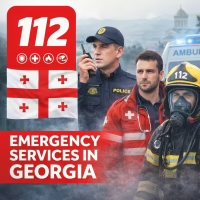
The unified emergency number in Georgia is 112. This emergency service is accessible to everyone in the country—Georgian citizens, tourists, foreigners, expats, and temporary residents. Using 112 is crucial in any emergency to get immediate help from ambulance, police, or fire and rescue services. The 112 emergency hotline in Georgia connects several emergency services through one number: police, fire/rescue services, emergency medical assistance (ambulance). If a situation threatens your health, life, or safety—or the safety of others—it is vital to react quickly and call 112 immediately. In emergencies, one call connects you to all critical services. You should call 112 in Georgia during emergency situations that require urgent medical care, police intervention, or fire rescue services. Examples include serious injuries or car accidents, sudden health deterioration, loss of consciousness, difficulty breathing, severe pain, heavy bleeding, emergencies involving children or elderly people, fire, gas leaks, dangerous public situations, criminal incidents requiring police intervention.
READ MORE...
Vaccination for Kindergarten in Georgia: What Parents Need to Know

Vaccination for Kindergarten in Georgia: What Parents Need to Know

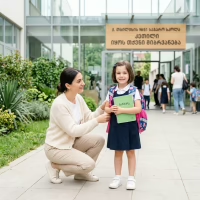
What vaccinations are required for kindergarten in Georgia and how strict are the rules? This guide explains the official immunization schedule, required vaccines by age, and what kindergartens usually expect. It also covers common expat concerns, including whether foreign vaccination records are accepted and what to do if some vaccines are missing after moving to Georgia.
READ MORE...
Childhood Vaccination in Georgia in 2026

Childhood Vaccination in Georgia in 2026

Child vaccination in Georgia in 2026 is crucial under the National Immunization Schedule. Mandatory vaccines are free, and additional ones can be obtained at private clinics. Learn about the vaccination process, including considerations for premature infants, kindergarten, and parental guidance for the year 2026.
READ MORE...
Diabetic Retinopathy

Diabetic Retinopathy

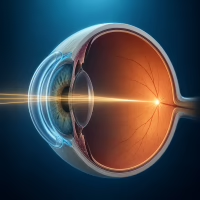
Diabetic retinopathy is a vascular eye disease that affects individuals with diabetes. It can lead to vision loss due to pathological changes in the retinal layers. Symptoms include overall vision deterioration, distorted shapes, hazy vision, and more. Regular eye exams are crucial for early detection. Complications of retinopathy include retinal detachment and macular edema. Treatment options range from lifestyle changes to advanced medical interventions like laser photocoagulation and vitrectomy.
READ MORE...
Healthy Nutrition for Hair — A Diet for Growth and Strengthening

Healthy Nutrition for Hair — A Diet for Growth and Strengthening

Learn how nutrition influences hair health and the role of essential vitamins like A, B, E, C, and D. Discover the importance of sulfur for keratin bond formation and protein synthesis in hair. Proper nutrient intake is key for maintaining beautiful and healthy hair growth. Deficiencies in vitamins can lead to hair loss, dry scalp, and brittle hair. Find out how a balanced diet supports hair follicles and promotes strong, vibrant hair.
READ MORE...
Scalp seborrhea: symptoms, causes, diagnosis, treatment

Scalp seborrhea: symptoms, causes, diagnosis, treatment

Scalp seborrhea is a condition involving the sebaceous glands of the scalp. Causes include genetic predisposition, metabolic disorders, stress, and fungal infections. Symptoms range from flaking and itching to red spots and skin lesions. Diagnosis is based on clinical signs and history. Treatment involves antifungal agents, topical products, antimycotic drugs, and vitamin therapy. Prevention focuses on hygiene, hair care products, diet, and stress management. Maintain proper scalp care for healthy hair.
READ MORE...
How to determine your skin type?

How to determine your skin type?

Understanding your skin type is crucial for choosing the right skincare products and maintaining healthy skin. Normal skin is well-balanced, while dry skin is prone to redness and flakiness. Oily skin requires thorough cleansing to control shine. Combination skin needs a tailored approach for different areas. Avoid creams with aggressive solvents, opt for gentle, nourishing formulas instead.
READ MORE...