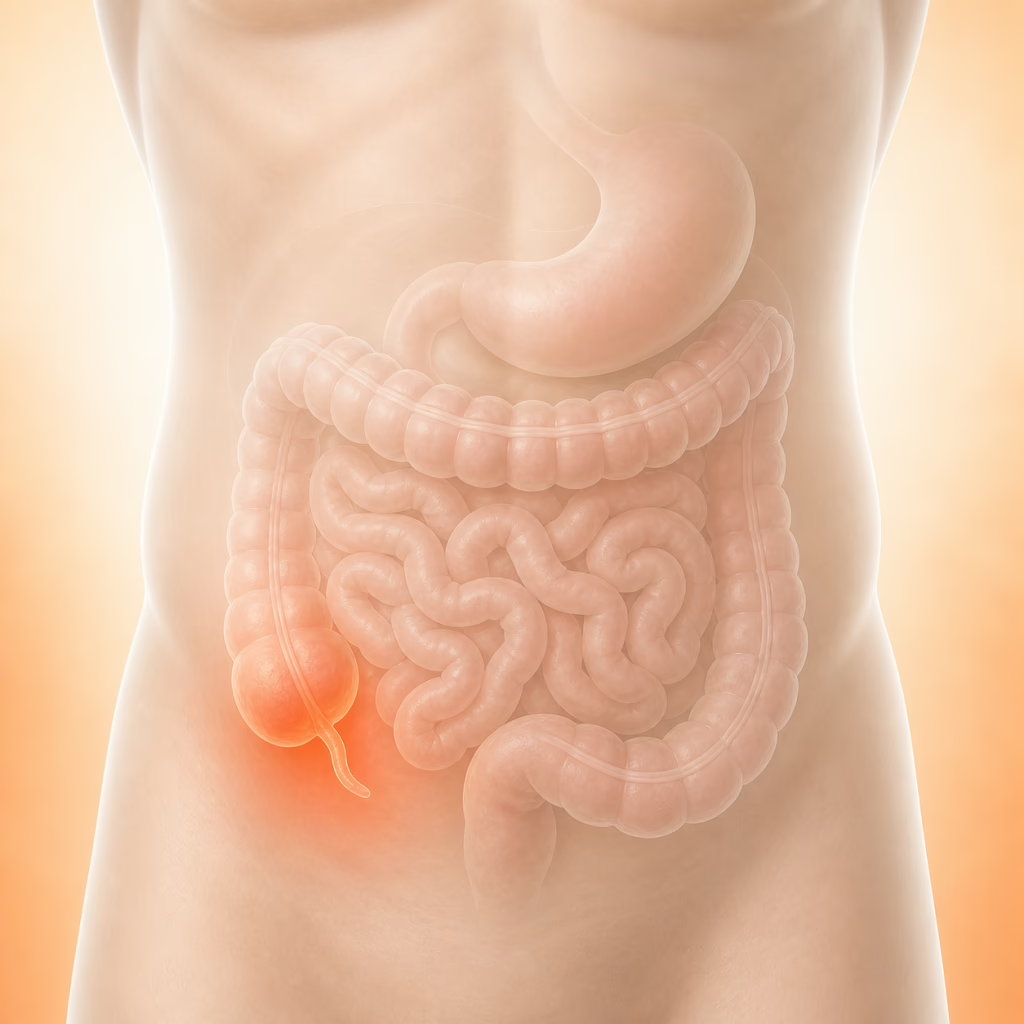
There are many reasons why you might feel pain in your lower right abdomen. Sometimes, it is just a minor intestinal issue that passes on its own. Other times, it could be a sign of appendicitis.
Appendicitis needs quick medical care. That’s why it helps to know which symptoms might point to appendix inflammation and when you should not wait for the pain to go away by itself.
This article explains in simple terms why your lower right abdomen might hurt. We’ll cover the usual signs of appendicitis, what tests a doctor may use, and when it’s important to get urgent help.
Important: You can’t always tell the exact cause of pain just from symptoms. If your pain is severe, gets worse quickly, or you start to feel worse overall, see a doctor right away.
Use the abdominal pain guide to choose the area that hurts, review warning signs, and find the right type of doctor.
Why Does the Lower Right Abdomen Hurt?
Pain in the lower right abdomen can come from different organs or health problems.
Among the possible causes:
* appendicitis;
* intestinal infection;
* constipation or severe gas formation;
* inflammatory bowel diseases;
* urinary tract infections;
* urinary tract stones;
* other diseases of the abdominal organs.
For girls and women, pain in this area can also be linked to reproductive system issues. So, just having pain in the lower right abdomen does not always mean it’s appendicitis.
What Is Appendicitis?
Appendicitis means the appendix is inflamed. The appendix is a small pouch connected to your intestine, usually found in the lower right side of your abdomen.
When the appendix is inflamed, the pain often gets worse over time. For many people, it starts near the belly button and then moves to the lower right abdomen, but not everyone has this pattern.
If appendicitis isn’t treated quickly, it can lead to serious problems. If you think you might have it, don’t wait for days hoping the pain will pass.
How Does the Abdomen Hurt with Appendicitis?
The pain often starts near your belly button, then moves to the lower right side. It can get worse when you move, cough, or press on your stomach. The pain may be steady and get stronger over time.
There isn’t just one way that appendicitis pain shows up.
Often, the pain:
* starts around the navel;
* shifts down and to the right after a few hours;
* gradually intensifies;
* becomes constant;
* worsens with walking, coughing, or other movements.
Sometimes, the pain starts right in the lower right abdomen. In children and some adults, symptoms can look different from the usual signs. So, if you have unusual pain, you can’t rule out appendicitis by yourself.
Main Signs of Appendicitis
Other symptoms can show up along with belly pain.
The most common signs:
* nausea;
* vomiting;
* reduced appetite or loss of appetite;
* fever;
* constipation or diarrhea;
* abdominal bloating;
* increased pain with movement or coughing.
You might only have a few of these symptoms. For example, your temperature could be normal at first.
How to Tell Appendicitis Apart from Common Indigestion?
You can’t reliably tell the difference at home just by looking at your symptoms.
With indigestion or bowel upset, pain may be accompanied by bloating, diarrhea, or other digestive issues, and usually decreases over time.
With appendicitis, the pain usually doesn’t go away and keeps getting stronger. Pay special attention if you have steady pain in the lower right abdomen along with nausea, vomiting, loss of appetite, or fever.
But these symptoms can also happen with other health problems. That’s why only a doctor can make the final diagnosis.
When Should You Seek Urgent Medical Help?
Do not delay seeking medical attention if abdominal pain:
* grows stronger;
* does not go away;
* becomes constant;
* interferes with normal walking or movement;
* is accompanied by a fever;
* is accompanied by repeated vomiting;
* appears along with severe weakness or a sudden deterioration of overall well-being.
If you have severe or quickly worsening belly pain, get medical help right away. If you think it could be appendicitis, it’s better to see a doctor early instead of waiting for every symptom to show up.
If the pain is severe, rapidly worsening, or the situation appears to be an emergency, call 112 in Georgia. If you suspect appendicitis, do not wait for every listed symptom to appear.
What to Do If Your Lower Right Abdomen Hurts?
If your pain is severe or getting worse, don’t try to figure out the cause on your own.
It’s best to see a doctor and tell them:
* when the pain started;
* where it began;
* whether it moved to the lower right abdomen;
* how severe the pain is;
* whether movement makes the pain worse;
* whether there is a fever;
* whether nausea, vomiting, or changes in stool occurred;
* what medications have already been taken.
Sharing this information helps your doctor understand your situation faster.
How Is Appendicitis Diagnosed?
To diagnose the problem, the doctor will ask about your symptoms and examine your abdomen.
Depending on the situation, the following may be needed:
* blood test;
* urinalysis;
* abdominal ultrasound;
* computed tomography (CT scan);
* other investigations.
Doctors use these tests not just to confirm appendicitis, but also to rule out other causes of pain, like urinary tract infections or kidney stones.
How Is Appendicitis Treated?
How appendicitis is treated depends on your specific case.
If you have appendicitis, your doctor might give you antibiotics. In many cases, surgery to remove the inflamed appendix, called an appendectomy, is needed.
If the inflammation leads to serious problems, treatment can get more complicated, and you might need extra procedures.
So, if you think you might have appendicitis, it’s very important to see a doctor as soon as possible.
Can You Check for Appendicitis Yourself?
No. You can’t confirm or rule out appendicitis with home tests.
Don’t press hard on your belly or try to diagnose yourself just by how much a certain spot hurts.
A doctor looks at more than just your pain. They consider your symptom history, exam results, lab tests, and other checks if needed.
Which Doctor Should You See If Your Lower Right Abdomen Hurts?
If your pain is mild and only happens sometimes, start by seeing a general practitioner or family doctor. They’ll check you and, if needed, send you to a surgeon or another specialist. If you need a specialist, see our list of general practitioners.
But if your pain started suddenly, keeps getting worse, and is in the lower right abdomen, it’s best to go straight to the emergency room or see a surgeon.
If appendicitis is suspected, a surgeon will examine you and decide if you need more tests or surgery.
About this article: prepared by the BigMed editorial team for patients in Georgia. The medical information was checked on 18 August 2026. This article is for general information and does not replace an examination, diagnosis, or medical advice.
Sources
FAQ
Can appendicitis cause pain somewhere other than the right side?
Is a fever always present with appendicitis?
Does appendicitis always cause vomiting?
Can pain in the lower right abdomen go away on its own?
Can a single symptom identify appendicitis?
Living in Georgia or planning to move here?
We write about doctors, treatment prices and health insurance in Georgia — in plain language.