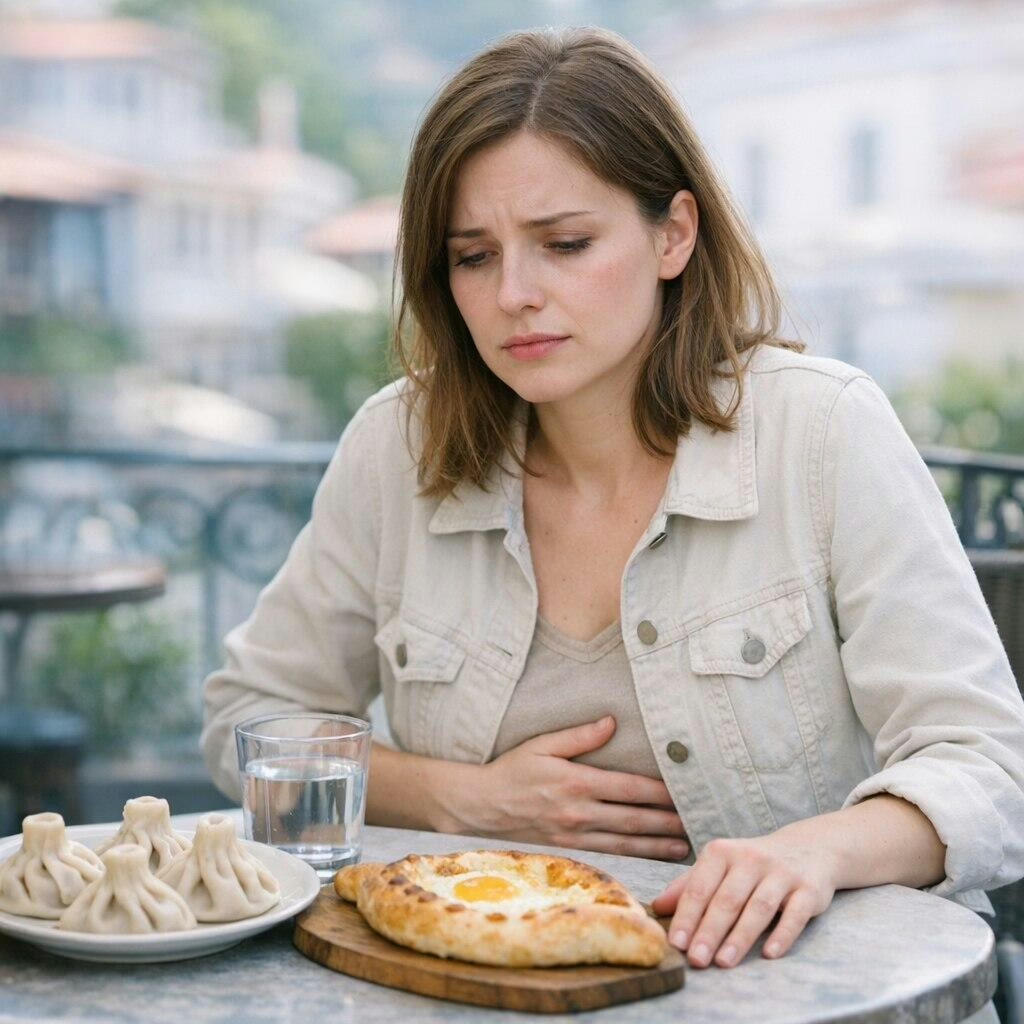
Food poisoning in Georgia is a real possibility that travelers should prepare for in advance.
Georgia is renowned for its vibrant cuisine and rich gastronomic traditions. Khinkali, khachapuri, shashlik, homemade cheeses, and wine attract many tourists. However, due to changes in diet, new foods, and hot weather, some people experience food poisoning.
This does not mean the food is of poor quality. Usually, the reason is that the body is not used to the local microflora, fatty dishes, spices, water, or even ice in drinks. Poisoning occurs especially often in summer in Tbilisi, Batumi, and other popular cities.
If you find yourself in such a situation, it’s important not to panic, but to understand what to do in case of poisoning in Georgia and where to seek help.
How Food Poisoning Manifests
Symptoms can appear a few hours after eating or the next day. Usually, these are nausea, vomiting, diarrhea, stomach pain, weakness, and sometimes fever.
For tourists, symptoms are often more pronounced, especially if the body is tired from flights, heat, or a change in diet. Mild poisoning usually goes away on its own, but sometimes a doctor’s help is needed.
What to Do in the First Hours of Poisoning in Georgia
First and foremost, it is important to restore fluid levels. Dehydration is the main danger with food poisoning, especially in hot weather. Drink water in small sips, but frequently. It’s best to use oral rehydration solutions sold in pharmacies. If possible, temporarily refrain from eating or stick to light foods like rice or crackers. If you feel very weak, drink sweet tea, compote, or broths—these will help you regain strength even if you can’t tolerate regular food. If you can’t eat for more than a day, or if the weakness becomes severe, do not delay seeking medical attention.
It’s important to know which medicines are truly necessary. Georgian pharmacies usually offer a standard set: sorbents, anti-diarrheal agents, and products for restoring water-salt balance. Even if your usual brand isn’t available, there are almost always analogs with the same active ingredient. Just describe your symptoms or show a translation in English.
To feel more confident, it makes sense to put together a small travel first aid kit in advance. It is recommended to bring:
A universal sorbent (for example, activated charcoal or Smecta)
Anti-diarrheal medicine (loperamide or analogs)
Solutions or powders for restoring water-salt balance (such as Regidron)
Gentle painkillers for stomach pain
A thermometer
Translations of instructions for these medicines into English or Georgian (you can take photos before the trip)
This will save you from unnecessary searching on the spot and help you quickly deal with the first symptoms.
Do not start taking antibiotics on your own. In most cases, food poisoning resolves without them, and improper use can cause harm.
Where to Buy Medicines in Georgia
One advantage is that pharmacies are available on almost every corner in Tbilisi, Batumi, and other cities. Many of them are open 24/7.
The most common chains are:
PSP Pharmacy
Aversi Pharmacy
GPC Pharmacy
Pharmacists often speak basic English, so explaining your problem is usually easy. Just say “food poisoning” or list your symptoms.
How to Call an Ambulance in Georgia
If your condition worsens, you develop a high fever, or experience severe weakness, be sure to seek medical help. Georgia has a single emergency number:
👉 112 Georgia Emergency Service
This number works nationwide—you can call an ambulance in Tbilisi and other cities. Operators answer calls 24/7 and often speak English.
When calling, briefly describe the situation: say you have food poisoning, list your symptoms, and give your location—hotel, apartment, or address.
Where to See a Doctor in Tbilisi and Other Cities
In addition to the ambulance, there are many private clinics in Georgia. For tourists, this is often the most convenient option: it’s easier to find English-speaking staff and get help without a long wait.
Among the well-known networks:
Evex Clinics
New Hospitals
You can go directly to these clinics without an appointment, especially if your condition is not critical but requires a doctor’s examination.
If you have travel insurance, you usually need to contact your insurance company first, and then go to the clinic. The operator will direct you to a specific medical facility, and treatment may be fully covered. If you go on your own, you may have to pay your own way.
If you are just planning your trip or are unsure whether your policy covers such cases, it’s worth clarifying the terms in advance — you can compare medical insurance options for Georgia on BigMed to understand what expenses are covered and what to do in an emergency.
If you can’t reach your insurer or have no connection, don’t panic or delay your visit to the doctor. In an emergency, go straight to the nearest private clinic or call 112 Georgia Emergency Service. After receiving help, be sure to keep all receipts and documents—they can be submitted to insurance for reimbursement when communication is restored. This way, you won’t lose the chance for compensation even if there were communication problems.
If you don’t have insurance, you can still go to a private clinic. These centers usually accept patients without insurance, and you pay at the time of the visit. A doctor’s consultation in Tbilisi or Batumi costs from 50–70 GEL, and with tests or IVs—from 150–250 GEL and higher, depending on the treatment. You can find out the exact price in advance on the clinic’s website or by phone. Payment is accepted in cash and by card. Private clinics often help call a taxi and provide a receipt, which you should keep.
What to Do If There’s a Language Barrier
In tourist areas, many doctors and pharmacists speak English, but sometimes you may have difficulties—especially in smaller cities or at night.
A simple solution: use a translator app on your phone and prepare basic words in advance, such as vomiting, diarrhea, and stomach pain. Usually, this is enough to explain the problem. It’s also helpful to write down or save key phrases in Georgian on your phone. For example: “I have food poisoning” — „მაქვს მოწამვლა“ (makvs motsamvla), “I feel bad” — „ცუდად ვარ“ (tsudad var), “Stomach hurts” — „მტკივა მუცელი“ (mtkiva muts'eli). These phrases will help you communicate with a doctor or pharmacist faster. Popular apps include Google Translate and Yandex Translate. They work even without the internet if you download the language in advance, and will help you quickly translate medical terms or phrases in an emergency.
It is usually easier to find English-speaking staff in private clinics than in public hospitals.
When You Should Seek Emergency Help
Although most cases resolve on their own, there are situations when you shouldn’t delay.
If your temperature is above 38.5°C, you have severe weakness, signs of dehydration, or symptoms last more than a day, see a doctor.
Pay special attention to children and the elderly—they are at higher risk of complications. At the first sign of illness, they should see a doctor immediately. If a child needs help, tell the clinic or call to request a pediatrician. In English, this is “pediatrician.” Major private clinics in Tbilisi and Batumi, as well as public hospitals, usually have a pediatrician, so you can go directly there. When communicating, use the phrases “We need a pediatrician” or “Child needs medical help.” Also at risk are tourists who cannot recover in comfortable conditions.
It’s important to understand that the cause is not only the quality of the food, but a combination of factors. Georgian cuisine is rich and fatty, the climate is hot, and tourists often try many dishes in a short time.
Add street food, ice in drinks, and unfamiliar water, and the risk of food poisoning increases compared to at home.
In reputable restaurants, the risk of poisoning is minimal. The main danger is random eateries and overeating.
To reduce the risk, don’t overload your body in the first days, choose places with good reviews, and avoid tap water. Always wash your hands with soap before eating and after visiting public places. If possible, avoid street food and snack bars, especially in the heat. Don’t drink beverages with ice—the ice may be made from tap water. Wash or peel fruits and vegetables from the market. Simple measures are often more effective than medicine.
Conclusion
Food poisoning in Georgia is common, but usually not dangerous if you act correctly.
It is easy to get help in Georgia: the 112 service operates, there are private clinics, and 24/7 pharmacies are available. Even if you don’t know the language or the system, basic medical care remains accessible and understandable.
The main thing is not to ignore symptoms, monitor your condition, and seek medical attention promptly if necessary.
FAQ
Does travel insurance cover food poisoning in Georgia?
What if there is a language barrier?
Can I buy medicine without a prescription?
When should I see a doctor urgently?
Living in Georgia or planning to move here?
We write about doctors, treatment prices and health insurance in Georgia — in plain language.