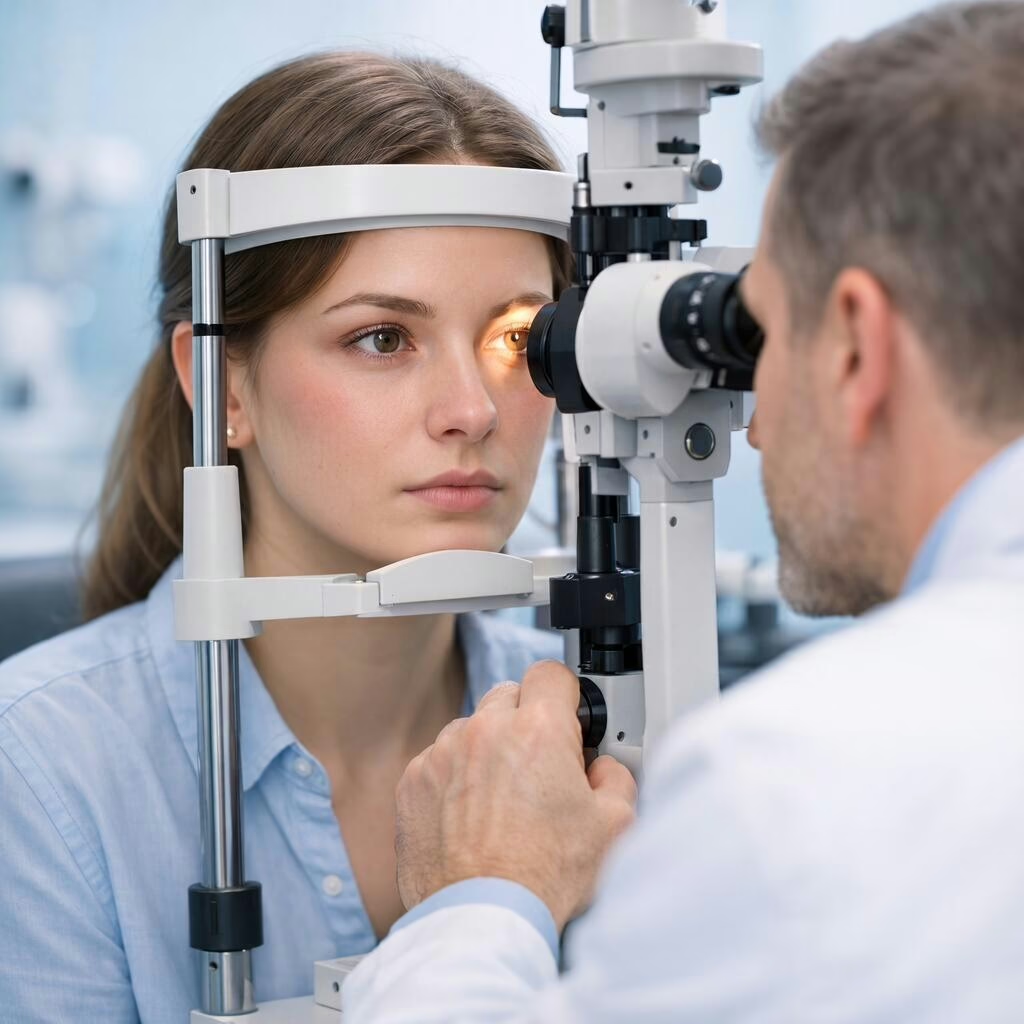
Diabetes mellitus is a disease in which blood circulation is impaired throughout the body. The eyes are not an exception, and diabetic retinopathy may develop.
What is Diabetic Retinopathy?
Diabetic retinopathy is a vascular eye disease that occurs in diabetes, causing pathological changes in the retinal layers.
How it develops:
- Blood flow in the eye vessels decreases.
- Oxygen deficiency occurs.
- The body compensates by growing new, fragile blood vessels, which can lead to frequent eye hemorrhages.
- As a result, visual functions deteriorate.
Statistics: Vision decreases in 80% of people with diabetes.
Symptoms of Diabetic Retinopathy
Early stages may be asymptomatic. Symptoms appear when significant vascular changes occur:
- Overall vision deterioration.
- Distorted lines or shapes.
- Hazy vision, floating spots, or dark “floaters.”
- Double vision.
- Possible eye pain.
Important: People with diabetes should regularly see an ophthalmologist — at least once a year!
Complications
- Retinal detachment.
- Retinal hemorrhages.
- Swelling of the central retina (macula) — diabetic macular edema.
- Neovascular glaucoma.
Diagnosis
Ophthalmology clinics may perform:
- Visual acuity and visual field testing.
- Amsler grid test and other diagnostic tests.
- Intraocular pressure measurement.
- Fundus and eye structure examination using ophthalmoscopy and slit-lamp.
- Early detection of macular edema via optical coherence tomography (OCT).
- Fluorescein angiography of the retina.
Important: Early diagnosis can save vision.
Treatment
Diabetic retinopathy cannot be fully cured, but its progression can be slowed to preserve vision.
Early stage:
- Regular monitoring by a doctor.
- Control of blood glucose and cholesterol levels.
- Blood pressure management.
- Healthy diet.
- Physical activity.
Advanced stage:
- Laser photocoagulation — cauterizing fragile vessels.
- Intravitreal injections — medication into the vitreous body.
- Vitrectomy — surgical removal of the vitreous body.
Living in Georgia or planning to move here?
We write about doctors, treatment prices and health insurance in Georgia — in plain language.